
What do you see?
Most will answer:
"A black dot."
Very few will say:
"A large white sheet with a tiny black dot on it."
And that is exactly how many of us live our lives.
The Psychology Behind the Black Dot
The Black Dot Experiment is often used to demonstrate a powerful truth about human behavior:
Our mind naturally focuses on what is wrong rather than what is right.
A single criticism can make us forget ten compliments.
One betrayal can overshadow years of loyalty.
One failure can make us ignore dozens of achievements.
One dark spot becomes bigger than an entire white canvas.
Psychologists call this the Negativity Bias — the tendency of the brain to give greater importance to negative experiences than positive ones.
Thousands of years ago, this helped humans survive dangers. Today, however, it often prevents us from enjoying life.
How the Black Dot Destroys Relationships
A husband may provide security, support, and care for years, But one mistake becomes the black dot.
A wife may sacrifice endlessly for her family, But one disagreement becomes the black dot.
An employee may contribute tremendously, But one error becomes the black dot.
A boss may help you in your growth and learning, But one tough conversation becomes the black dot.
A friend may stand beside us in difficult times, But one misunderstanding becomes the black dot.
The tragedy is not that black dots exist. The tragedy is when we forget the white paper around them.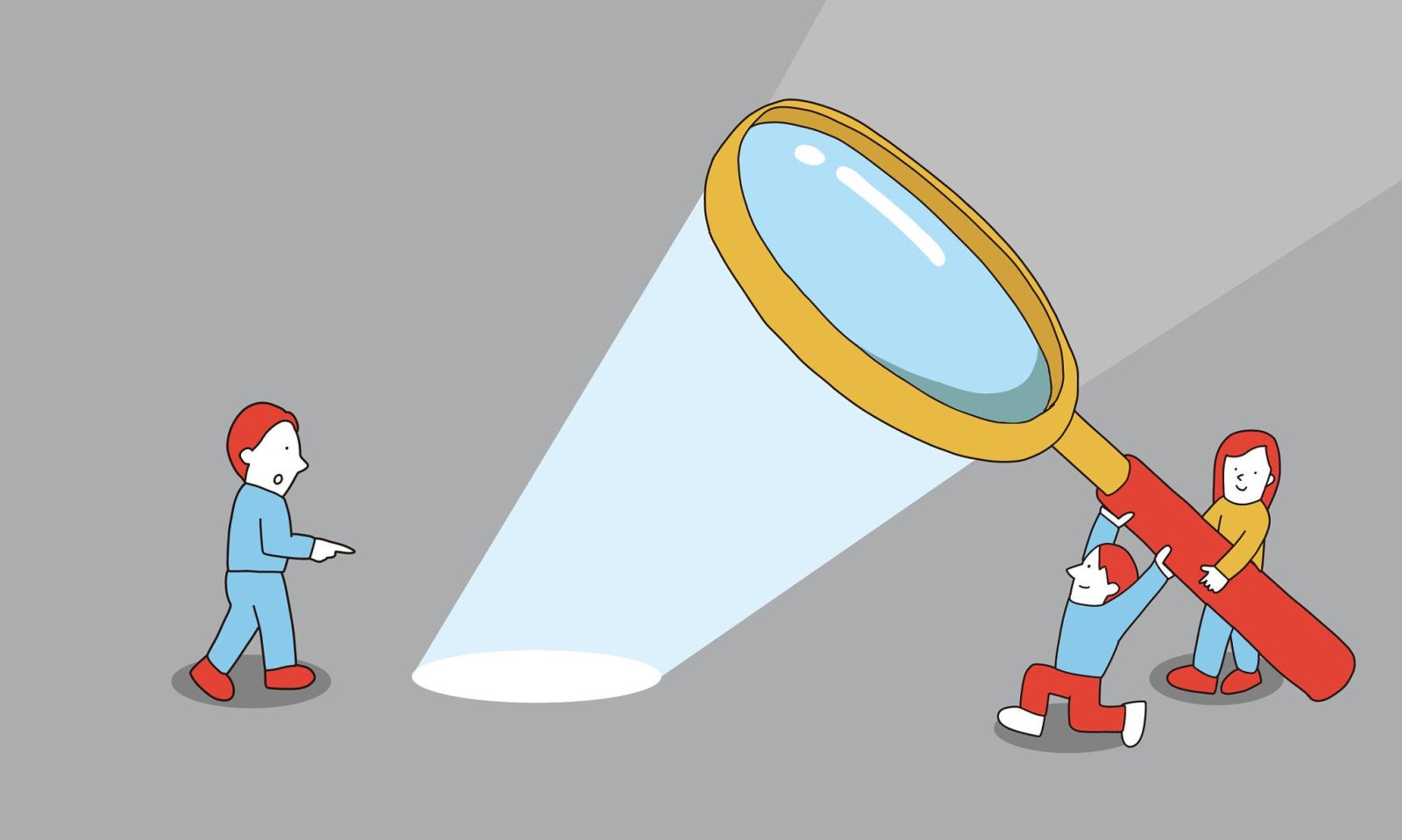
The Modern World Runs on Black Dots
News channels sell fear. Social media promotes outrage. People discuss failures more than successes. Scandals travel faster than kindness.
Negativity gets attention because the human mind is already programmed to notice it. As a result, many people are becoming experts at finding flaws and strangers to gratitude.
The Greatest Black Dot of All: Victim Thinking
Some people become so focused on what they lost that they forget what they still possess.
They count:
Who hurt them. Who betrayed them. Who ignored them. Who disappointed them.
But they stop counting:
Their Abilities. Their opportunities, Their health, Their lessons, Their blessing. and the people who actually helped them to grow.
Life then becomes a continuous search for black dots. And when the mind starts searching for darkness, it always finds it.

The Hidden Cost of Focusing on Black Dots
When we repeatedly focus on problems:
Anxiety increases.
peace decreases.
Relationship weaken
Productivity fails.
Confidence disappears
Gratitude dies
Happiness becomes impossible.
The black dot itself may be small. But the attention we give it makes it enormous.
Final Thought
Life is not defined by the black dots we carry.
It is defined by the white space we choose to notice. The person who sees only the dot lives in scarcity.
The person who sees the canvas lives in gratitude. And gratitude has a strange power:
It doesn't remove the black dots.
It simply stops them from becoming bigger than the rest of your life.